Eventually Font: A Versatile Choice for Modern Typography
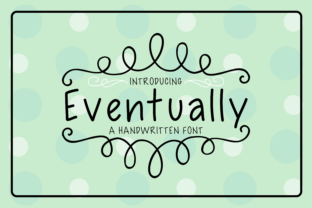
The Eventually font is a modern display font designed to offer both style and functionality. Created with a focus on readability and visual appeal, it combines casual charm with a professional aesthetic that makes it suitable for a wide range of applications. Whether used in digital or print media, Eventually stands out as a versatile option for designers and content creators looking for a font that works well across different contexts.
Understanding the Eventually Font
Eventually is a handcrafted typeface that blends the informality of casual writing with the clarity of structured typography. Its design reflects a balance between comfort and professionalism, making it an appealing choice for various uses. The font features clean lines, subtle curves, and consistent spacing, which contribute to its overall readability.
One of the key characteristics of Eventually is its ability to remain legible even on busy backgrounds. This makes it particularly useful for headlines, banners, and other elements that require attention without overwhelming the viewer. Its versatility also allows it to be used effectively in both minimalist and complex layouts.
Why Consider Eventually?
If you're evaluating fonts for a project, Eventually may be worth considering for several reasons. First, its casual yet polished appearance can help create a friendly and approachable tone, which is especially beneficial for brands targeting younger audiences or those emphasizing community and connection.
Second, the font's adaptability means it can be used in a variety of settings. It works well as a headline font due to its strong presence, but it also maintains readability in body text when used appropriately. This dual functionality makes it a practical choice for projects that require multiple typographic roles.
Additionally, Eventually is designed to work well with both light and dark color schemes, which is increasingly important in today’s responsive design environments. Its ability to maintain clarity across different color contrasts enhances its usability in diverse design scenarios.
Benefits and Tradeoffs
The primary benefit of using Eventually is its versatility. It can be applied in numerous contexts, from website headers to print materials, without losing its effectiveness. Its readability ensures that messages remain clear, even when viewed quickly or at a distance.
However, like any font, Eventually has tradeoffs. While it performs well in most situations, it may not be the best fit for highly technical or formal documents where a more traditional serif font might be preferred. Additionally, because it is a display font, it may not be ideal for long blocks of text due to potential fatigue caused by extended reading.
Another consideration is licensing. As with many modern fonts, Eventually may require a purchase or subscription, depending on the platform from which it is obtained. Designers should ensure they have the appropriate rights to use the font in their intended context, whether for personal or commercial purposes.
Situations Where Eventually Excels
Eventually is particularly well-suited for projects that require a modern, approachable feel. It works exceptionally well in branding, marketing materials, and user interfaces where a friendly yet professional tone is desired. Its ability to stand out against busy backgrounds makes it ideal for use in digital advertisements, social media posts, and web banners.
In print design, Eventually can be used effectively for magazine covers, posters, and packaging. Its clean lines and balanced proportions ensure that it remains visually appealing while maintaining readability. For websites, it functions well as a heading font, especially in designs that prioritize visual hierarchy and quick information absorption.
When Alternatives May Be Better
While Eventually is a strong choice for many applications, there are instances where alternative fonts may be more appropriate. For example, if a project requires a more formal or traditional look, serif fonts such as Times New Roman or Georgia could be better suited. These fonts often convey a sense of authority and reliability that Eventually may not provide.
In cases where large amounts of text need to be displayed, such as in lengthy articles or reports, a sans-serif font with a more refined structure—like Arial or Helvetica—might be preferable. These fonts are optimized for readability over long passages, which Eventually may not fully support due to its display-oriented design.
Additionally, if a designer is working within a specific brand identity that already has established typographic guidelines, it may be necessary to adhere to those standards rather than introducing Eventually. In such cases, consistency with existing visual language takes precedence over exploring new options.
Practical Insights for Decision-Making
When deciding whether to use Eventually, consider the following factors:
- Project goals: Is the goal to create a modern, approachable look, or does the project require a more formal or traditional aesthetic?
- Context of use: Will the font be used primarily for headings, or will it also appear in body text? If the latter, ensure it supports extended reading without causing visual fatigue.
- Design requirements: Does the font need to function well on both light and dark backgrounds? How does it interact with other design elements such as images, icons, and color schemes?
- Licensing and availability: Are there any restrictions on how the font can be used? Does the cost align with the project budget?
By carefully evaluating these aspects, designers can determine whether Eventually aligns with their needs and goals. Ultimately, the best font choice depends on the specific requirements of the project and the desired outcome.